I hear “we’ll wait until rates come down” almost every week. I get it. I just don’t think the wait is going to be short. In April, Jamie Dimon told a room of global investors in Oslo: “The way it’s going now, there will be some kind of bond crisis, and then we’ll have to deal with it.” At his last annual meeting as CEO in May 2025, Warren Buffett said: “Obviously, we wouldn’t want to be owning anything that we thought was in a currency that was really going to hell.” Two of the most respected money people in the country are both worried about the same thing: how much our government borrows. Here’s the simple version. Our national debt is now bigger than our entire economy, about 124% of GDP. When a country owes more than it produces in a year, investors want a bigger return to keep lending to it. That pushes up the 10-year Treasury, and mortgages and commercial loans are priced off that number. So what does that mean for you? Buyers: the rate you’re waiting for may not show up. Buy the right property and refinance if you get a break later. Sellers: price for the market we have now, not the one we had in 2021. Companies moving to Texas: your growth won’t wait on the Fed. Central Texas cities are still competing for you, so use that while it lasts. If you’re on the fence, let’s talk it through. Link in the comments. People first. Property second. #RealEstate #CentralTexas #CommercialRealEstate #InterestRates #KWCommercial
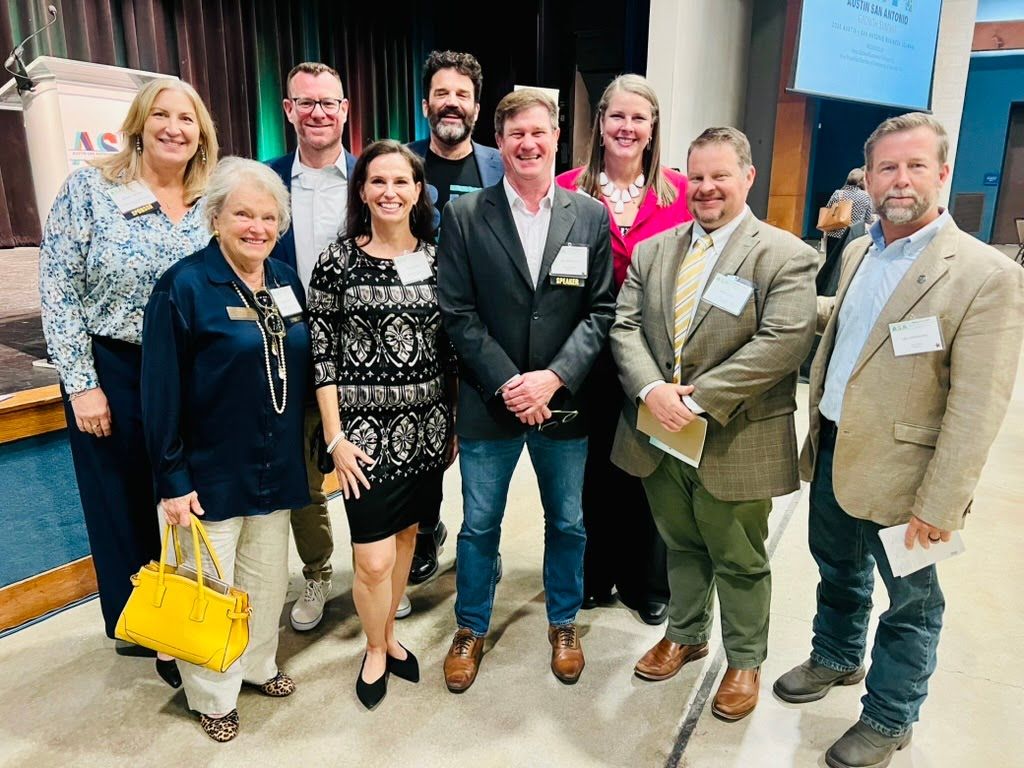
What new employers and workforce training mean for industrial property along I-35. On September 24, I attended the Austin Business Journal's Austin-San Antonio Growth Summit. Most of the conversation was about aerospace, defense, advanced manufacturing and tech companies moving into our part of I-35, and how our cities are getting ready for them. Two things I heard stuck with me. First, Buda’s mix of employers has changed a lot. At the summit, I heard that five businesses had come in over the previous nine months. That changes the conversation about what companies need from the area. Second, San Marcos and Texas State University are working together to train the workers these companies need. When a company is deciding where in Texas to go, workforce is one of the first things they ask about. It’s good to have an answer. I’m seeing the demand firsthand. Recently, I spoke with one tenant looking for about 2,000 square feet and another moving into Texas who needs around 300,000. Small spaces and big ones are both getting calls. For industrial property owners along the corridor, that brings the conversation back to your building. How does it compare with what’s available nearby, and what would these tenants need to make it work?
What Central Texas’ growing defense and aerospace sector means for industrial and flex owners. The demand has already changed. Since 2020, the Austin area has seen 54 new space and defense relocations and expansions, creating 6,338 jobs through May 2026, according to July reporting from the Austin American-Statesman. What interests me most is what happens when those companies start looking for buildings. Defense and aerospace users often need more than available square footage. Power, clear height, floor loading, controlled-access areas and specialized production requirements can quickly narrow the buildings that actually work. If your property can support those needs, your real competitive set may be smaller than you think. I’m also seeing companies grow on a different clock. A program award or production requirement can turn a future expansion into an immediate real estate need. And once a company installs equipment, qualifies its processes and invests heavily in a facility, relocating again isn’t necessarily simple. That doesn’t mean every defense startup is automatically a strong tenant. I still look closely at funding, credit, guarantees, TI exposure and whether the business can support the lease. A full building is not the goal. A tenant who is still there in year seven is.
I hear “we’ll wait until rates come down” almost every week. I get it. I just don’t think the wait is going to be short. In April, Jamie Dimon told a room of global investors in Oslo: “The way it’s going now, there will be some kind of bond crisis, and then we’ll have to deal with it.” At his last annual meeting as CEO in May 2025, Warren Buffett said: “Obviously, we wouldn’t want to be owning anything that we thought was in a currency that was really going to hell.” Two of the most respected money people in the country are both worried about the same thing: how much our government borrows. Here’s the simple version. Our national debt is now bigger than our entire economy, about 124% of GDP. When a country owes more than it produces in a year, investors want a bigger return to keep lending to it. That pushes up the 10-year Treasury, and mortgages and commercial loans are priced off that number. So what does that mean for you? Buyers: the rate you’re waiting for may not show up. Buy the right property and refinance if you get a break later. Sellers: price for the market we have now, not the one we had in 2021. Companies moving to Texas: your growth won’t wait on the Fed. Central Texas cities are still competing for you, so use that while it lasts. If you’re on the fence, let’s talk it through. Link in the comments. People first. Property second. #RealEstate #CentralTexas #CommercialRealEstate #InterestRates #KWCommercial
What new employers and workforce training mean for industrial property along I-35. On September 24, I attended the Austin Business Journal's Austin-San Antonio Growth Summit. Most of the conversation was about aerospace, defense, advanced manufacturing and tech companies moving into our part of I-35, and how our cities are getting ready for them. Two things I heard stuck with me. First, Buda’s mix of employers has changed a lot. At the summit, I heard that five businesses had come in over the previous nine months. That changes the conversation about what companies need from the area. Second, San Marcos and Texas State University are working together to train the workers these companies need. When a company is deciding where in Texas to go, workforce is one of the first things they ask about. It’s good to have an answer. I’m seeing the demand firsthand. Recently, I spoke with one tenant looking for about 2,000 square feet and another moving into Texas who needs around 300,000. Small spaces and big ones are both getting calls. For industrial property owners along the corridor, that brings the conversation back to your building. How does it compare with what’s available nearby, and what would these tenants need to make it work?
What Central Texas’ growing defense and aerospace sector means for industrial and flex owners. The demand has already changed. Since 2020, the Austin area has seen 54 new space and defense relocations and expansions, creating 6,338 jobs through May 2026, according to July reporting from the Austin American-Statesman. What interests me most is what happens when those companies start looking for buildings. Defense and aerospace users often need more than available square footage. Power, clear height, floor loading, controlled-access areas and specialized production requirements can quickly narrow the buildings that actually work. If your property can support those needs, your real competitive set may be smaller than you think. I’m also seeing companies grow on a different clock. A program award or production requirement can turn a future expansion into an immediate real estate need. And once a company installs equipment, qualifies its processes and invests heavily in a facility, relocating again isn’t necessarily simple. That doesn’t mean every defense startup is automatically a strong tenant. I still look closely at funding, credit, guarantees, TI exposure and whether the business can support the lease. A full building is not the goal. A tenant who is still there in year seven is.